11.22.2006

UNCLE QUIGLEY


Crested Caracara (Caracara cheriway)
Photo: © 2005 Jeffrey Berger

A member of the falcon family, the crested caracara is a dapper raptor who gets my vote for the best-dressed bird north of Lake Okeechobee. He has a ruddy orange complexion and sports a white tie and tails, a sash of brown Glengarry plaid, and a black toupé. I was fortunate to capture Uncle Quigley in chiaroscuro.

A versatile feeder, the caracara will hunt for prey like a raptor or dine on carrion like a vulture.

The caracara is listed as "threatened" in the State of Florida. The current population is estimated to be less than 400 birds. Since their natural range is comprised of pasteurs and prairies, their future fate is solely in the hands of ranchers and private land-owners.

ANHINGA


Scientific Name: Anhinga anhinga
Location: Green Cay, Delray Beach
Photo: © 2006 Jeffrey Berger

I found this anhinga preening herself in the warm light of a setting sun. That pointed bill, those ruby-red eyes, and nut-brown feathers that almost look like fur, so I lingered awhile ...

10.10.2006

CORMORANTS AT DAWN


Double-Crested Cormorant (Phalacrocorax auritus)
Location: Cross Creek
Photo: © 2004 Jeffrey Berger

Like the anhinga, the double-crested cormorant is also an underwater swimmer that will find a perch and spread its wings to dry in the sun. Cormorants form large nesting colonies along with anhinga, egrets and herons.

IBIS IN THE MORNING


WHITE IBIS (Eudocimus albus)
Location: Cross Creek
Photo: © 2004 Jeffrey Berger

The nomadic white ibis is experienced in massive flocks like star clusters in the Milky Way. I found this flock foraging the grasses and sedges of Lochloosa Lake.

The ibis has bright white feathers with black wingtips and stands about two feet tall. The ibis is a tactile feeder that will use its thin orange decurved bill as a probe, sweeping it from side to side in shallow water. With the first touch of food, the bill snaps shut. The ibis nests near freshwater because their young are salt-stressed on marine cuisine.

10.09.2006

DRYAD


Great Egret (Ardea alba)
Photo: © 2005 Jeffrey Berger

According to Greek mythology, Dryads were a class of nymphs who presided over trees and forests. Like all nymphs, they represented a reverence for nature. Unlike nymphs, Dryads were considered mortal because they perished with the trees that sheltered and sustained them. The wanton destruction of a tree was considered an act of impiety against the gods and subject to punishment.

Today, many native birds come under the protection of state and federal laws. Despite these protections, some native species remain in steep decline. Why? Laws that protect birds from direct threats such as hunting and poaching do little to protect them from indirect threats such as habitat loss. Deprived of shelter and sustenance, many bird species will continue to decline in future years. How? Drainage of wetlands for agriculture or real estate development, wasteful water management policies, petrochemical pollutants, and the relentless encroachment of civilization into natural habitats, as examples.

The name "Dryad" captures the essence of a moral and spiritual dilemma, i.e., economic exploitation and waste in conflict with Nature.

9.08.2006

A WETLANDS REFLECTION

JUVENILE:


ADULT:


American Alligator (Alligator mississippiensis)
Location: Cross Creek
Photos (above): © 2004 Jeffrey Berger

Florida is the birthplace of John Archibald Wheeler, the theoretical physicist who first coined the term “black hole.” What is the relationship between back holes and alligators, you ask? As this correspondent has often observed, Floridians have a morbid and peculiar fascination with large predatory reptiles, and black holes are the ultimate gators in the Universe. Black holes are long dead stars at the center of galaxies, so named because nothing - not even light - can escape their gravitational pull. Yet, black holes represent the ying and yang of cosmic death and rebirth. Our sun, the planets, and the elements of life are born from the detritus of long-dead stars.

The relationship between black holes and galaxies is like the bond between gators and birds. Nesting birds know instinctively that the patient and silent alligator offers a definitive defense against tree-climbing predators such as possums and raccoons.  In exchange, alligators know with equal instinct that tasty fledglings drop from treetops. Gators may be fearsome predators but they also make welcome protectors. To protect the breeding colony, nesting birds prefer the company of gators. Thus, gators play an vital role in the ecology of our wetlands.

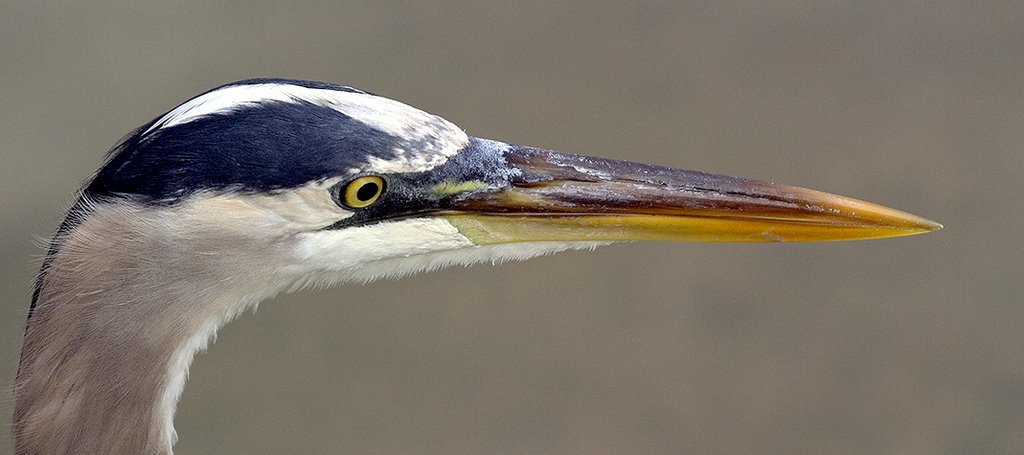
MEET BILL


Great Blue Heron (Ardea herodias)
Location: Everglades
Photo: © 2004 Jeffrey Berger

Whether stalking prey or defending territory, Bill’s bill can be a formidable weapon. Great Blue Herons spear their prey with a quick thrust of their long beaks. They can even scare off a gator. If you find an injured Great Blue, it is not recommended to rescue this bird by yourself. Call your local wildlife rescue center.

GREAT BLUE HERON


Scientific name: Ardea herodias
Location: Sebastian Inlet State Park
Photo: © 2003 Jeffrey Berger

Great Blue is the largest heron in North America. Also called “blue crane” by locals, the Great Blue Heron stands four feet tall and has a seven-foot wingspan. When stalking prey, this long-legged wader will stand motionless for long periods of time and strike suddenly with lighting quick reflexes when prey comes within range.

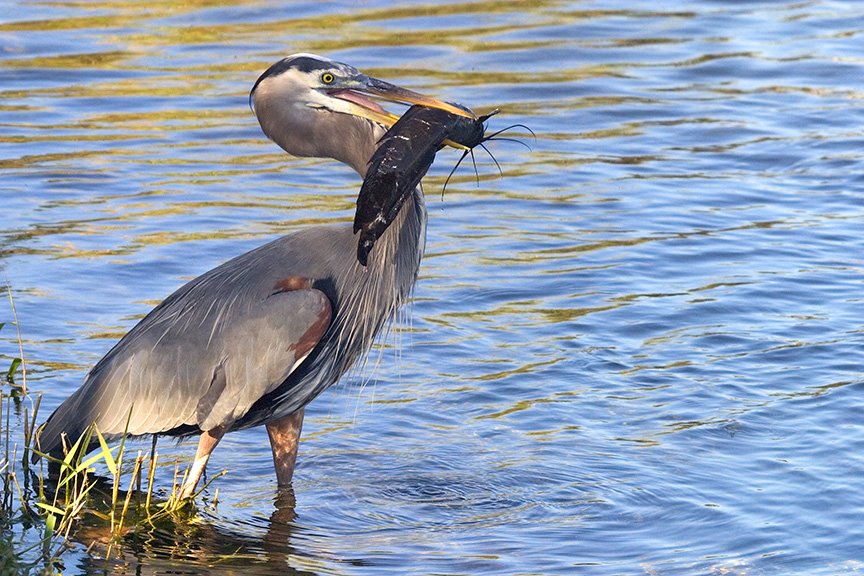
HUNGRY HERON


Great Blue Heron (Ardea herodias)
Location: Everglades
Photo: © 2003 Jeffrey Berger

Fish are the staple diet of the great blue heron. Watching a great blue swallow a fish can be an adventure in suspense, especially a spiny catfish larger than a heron's throat. Great blues have been known to choke on especially large prey.
Gulp! Ouch! Heimlich, anyone?

9.06.2006

"LEGS"


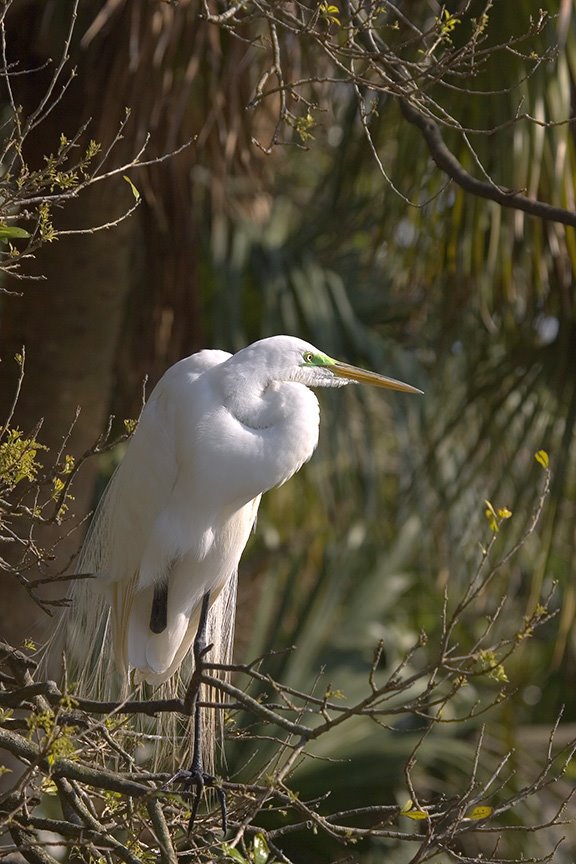
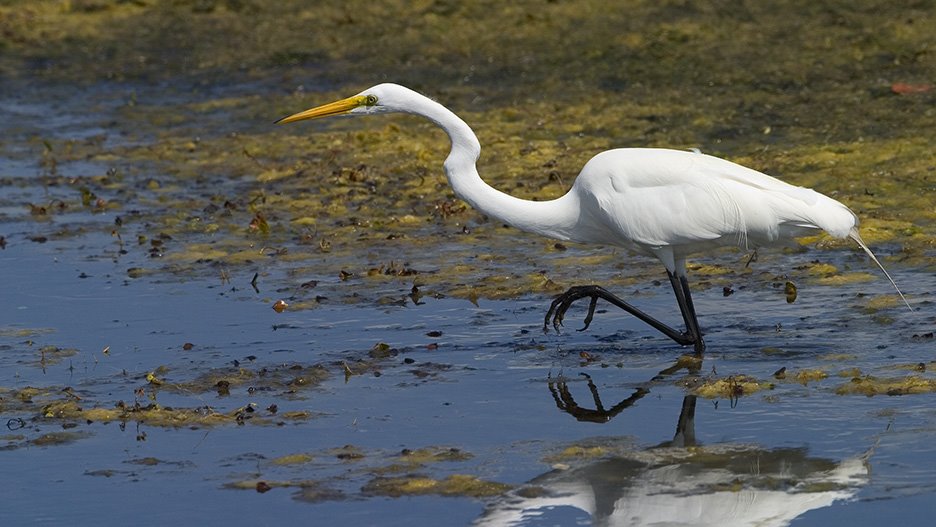
GREAT EGRET (Ardea alba)
Location: Merritt Island NWR
Photo: © 2003 Jeff Berger

The slender and flowing Great Egret is an unmistakable presence in any wetlands environment. This large bird stands over three feet tall, decked in pure white feathers, a yellow pointed bill, and black legs and feet.

During the breeding season, long and lacy plumes extend beyond the lower back and tail. During flight, the Great Egret will fold its long neck into a characteristic S-curve, which gracefully unfurls as it glides to a landing on outstretched wings. To protect their nests from terrestrial predators, Great Egrets prefer the company of alligators.

7.01.2006

GLOSSY IBIS


Scientific Name: Plegadis Falcinellus
Location: Wakodahatchee Wetlands
Photo: © 2007 Jeff Berger

6.06.2006

LIMPKIN


LIMPKIN (Aramus guarauna)
Location: Wakodahatchee Wetlands
Photo: © 2007 Jeffrey Berger

Remember those early Tarzan films and those jungle wails on the soundtrack? Kee-YAAAH! Kee-YAAAH! It is the call of a limpkin, a native Floridian. Those limpkin calls were recorded during the filming of Tarzan.

The limpkin is a marsh bird found only in the New World tropics. Part ibis, part crane, and part rail, it is considered to be one of the most usual of birds. Called “limpkin” on account of its awkward gait, it is nevertheless an avid flier and swimmer and ranks among the fastest runners. Limpkins feed principally on apple snails, a diminishing food source due to habitat loss.

6.01.2006

PREDATOR AND PREY


Predator – American alligator (Alligator mississippiensis)
Prey – Common Moorhen (Gallinula chloropus)
Location: Wakodahatchee Wetlands
Photo: © 2007 Jeffrey Berger

Not my favorite photo, but rarely seen moments like this justify this post. About this moment: One young gator about 3 feet long snatches one plump moorhen, known locally as a 'pond chicken.'

Fun question of the week: Of all persons in the news lately, who would you like to be the gator, and who should have the role of pond chicken? Leave your comment below.

5.30.2006

GREAT EGRET


GREAT EGRET (Ardea alba)
Location: St. Johns County FL
Photo: © 2008 Jeffrey Berger

The Great Egret is a common bird in Florida and, not without coincidence, one of the most often photographed birds in this blog. For your convenience, here are some links to other photos: Notable, Adorable, Unforgettable, and always Egretable.

5.01.2006

MISSION STATEMENT

Photography removes all subjects from the continuity of space and time.  An endangered species may appear abundant in the frozen moment of a photograph but in reality may be elusive and hard to find.  Out of context, a hard-won nature photograph fails to convey the grim truth that everywhere our precious wildlife heritage is at risk.

Public exhibition of nature photography serves as a medium for environmental education and makes an important statement:  It is vitally important to engage the public in conservation issues and gain their support if we are to save our wildlife heritage for future generations.  That is why conservation is always the implied mission of a nature photographer.

4.01.2006

A SPRING SAMPLER


Brown Pelican (Pelicanus occidentalis)
Photo: © 2012 Jeffrey Berger


Anhinga (Anhinga anhinga)
Photo: © 2012 Jeffrey Berger


Great Blue Heron (Ardea herodias)
Photo: © 2012 Jeffrey Berger