Showing posts with label Nature. Show all posts

1.01.2014

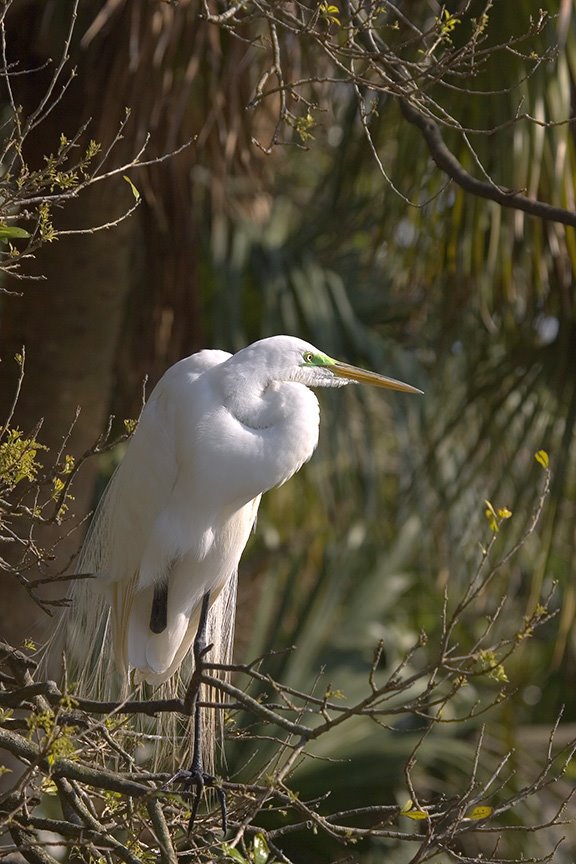
EGRET FAMILY VALUES


GREAT EGRET (Ardea alba)
Location: St. Johns County FL
Photo: © 2004 Jeffrey Berger

When planning your nest egg for the best of times or the worst of times, here is a bit of savvy investment advice from a native bird. It is always best to hedge your bets by hatching more eggs than you will need. Whether breeding or investing, it is a time-honored strategy perfected over millions of years.

Most large birds - such as eagles, egrets, or herons - will produce more eggs than they are capable of raising. Since all eggs need the same time to incubate regardless of when they are laid, Mamma Egret starts incubation after the first egg is laid and continues laying her full clutch over a series of days. Thus, the first egg hatches first, the last egg hatches last, and not all chicks start life as equal opportunity egrets.

The first-born hatchling has no competition for food and grows rapidly. Chicks born later are sequentially smaller and less capable of competing for food against the older siblings. Even in the best of times, only the older chicks will survive while the youngest will waste away. During routine housekeeping, parents will toss the expired chicks overboard, which inevitably become snacks for waiting gators. This phenomenon is known as ‘brood reduction.’

5.25.2009

WOOD DUCK


WOOD DUCK (Aix sponsa)
Location: Brevard County FL
Photo: © 2004 Jeffrey Berger

This photo of a wood duck is dedicated to my good friend, Peter Schutté, who passed away in 2005. Even after a passage of years, I still think of Peter who was a dedicated and tireless conservationist. He served on the Board of Directors of the Sea Turtle Preservation Society.

Peter and I found this dabbler on a day excursion. It was our last outing together before he died. This photo hangs in the Capital Building, a contribution to the Florida State Art Collection in Peter’s memory.

11.29.2008

THANKSGIVING 2008


Wild Turkey (Meleagris gallopavo)
Location: Homosassa Springs State Wildlife Park
Photo: © 2008 Jeffrey Berger
For my own part I wish the Bald Eagle had not been chosen the Representative of our Country. He is a Bird of bad moral Character. He does not get his Living honestly.
Thus wrote Ben Franklin in a letter to his daughter dated January 26, 1784. Old Ben regarded the wild turkey as "a true native American" and the bald eagle as an ignoble snatch-thief who purloins fish from honest ospreys. In retrospect, had the choice of national bird been reversed, it is hard to imagine a plump gobbler with cranberries and yams ensconced on our currency.

The wild turkey is the second largest bird in North America, and the toms are truly handsome critters with iridescent feathers. A mature gobbler may stand 4 feet tall and weigh up to 24 pounds with wings spanning 5 feet across.

In truth, both the wild turkey and the bald eagle are native to the Americas.  However, Americans cannot lay exclusive claim to either species, since both range from Canada to Mexico.

3.13.2008

WHITE IBIS


White Ibis (Eudocimus albus)
Photo: © 2008 Jeffrey Berger

GOLDEN-SILK SPIDER WITH FUZZY BOOTIES


Golden-Silk Spider (Nephila clavipes)
Photo: © 2008 Jeffrey Berger

A common inhabitant of swamps and woodlands, the golden-silk spider is harmless to humans and beneficial to the environment.

12.05.2007

DOODLES ON THE SCRATCH PAD OF TIME


Ghost Crab (Ocypode quadrata)
Photo: © 2004 Jeffrey Berger

"As we conclude our lecture, ladies and gentlemen, this fossilized specimen, estimated to be over 100,000 year old, bears an uncanny relationship to the modern crab. Yet, the question remains: Is this an example of evolution or intelligent design? What say you all?"

Click. Clack.
Clickity clack.
Click. Clack.
Clickity clack.
So say we all
.

11.22.2006

ANHINGA


Scientific Name: Anhinga anhinga
Location: Green Cay, Delray Beach
Photo: © 2006 Jeffrey Berger

I found this anhinga preening herself in the warm light of a setting sun. That pointed bill, those ruby-red eyes, and nut-brown feathers that almost look like fur, so I lingered awhile ...

10.09.2006

DRYAD


Great Egret (Ardea alba)
Photo: © 2005 Jeffrey Berger

According to Greek mythology, Dryads were a class of nymphs who presided over trees and forests. Like all nymphs, they represented a reverence for nature. Unlike nymphs, Dryads were considered mortal because they perished with the trees that sheltered and sustained them. The wanton destruction of a tree was considered an act of impiety against the gods and subject to punishment.

Today, many native birds come under the protection of state and federal laws. Despite these protections, some native species remain in steep decline. Why? Laws that protect birds from direct threats such as hunting and poaching do little to protect them from indirect threats such as habitat loss. Deprived of shelter and sustenance, many bird species will continue to decline in future years. How? Drainage of wetlands for agriculture or real estate development, wasteful water management policies, petrochemical pollutants, and the relentless encroachment of civilization into natural habitats, as examples.

The name "Dryad" captures the essence of a moral and spiritual dilemma, i.e., economic exploitation and waste in conflict with Nature.

5.01.2006

MISSION STATEMENT

Photography removes all subjects from the continuity of space and time.  An endangered species may appear abundant in the frozen moment of a photograph but in reality may be elusive and hard to find.  Out of context, a hard-won nature photograph fails to convey the grim truth that everywhere our precious wildlife heritage is at risk.

Public exhibition of nature photography serves as a medium for environmental education and makes an important statement:  It is vitally important to engage the public in conservation issues and gain their support if we are to save our wildlife heritage for future generations.  That is why conservation is always the implied mission of a nature photographer.