Showing posts with label Blue Crane. Show all posts

12.11.2006

BRETT & LUCETTE EGRET


Cattle Egret (Bubulcus ibis)
Photo: © 2006 Jeffrey Berger

Originally a native of Africa, the cattle egret colonized the New World sometime during the last century. Cattle egrets earn their name by feeding on grassland insects that have been disturbed by grazing animals.

In other parts of the world, they are known as “buffalo egrets” or “rhinoceros egrets” depending upon what kind of grazing ungulate they choose to follow. In Florida, they tag behind farm machinery in pursuit of grubs and insects. How about calling them “Tractor Egrets” instead of “Cattle Egrets?” Although non-native, this bird is considered beneficial by keeping insect populations in check.

During the mating season, plumage will change from bright white to buff-orange around the head, nape and back. Brett & Lucette represent a nuptial pair.

9.08.2006

GREAT BLUE HERON


Scientific name: Ardea herodias
Location: Sebastian Inlet State Park
Photo: © 2003 Jeffrey Berger

Great Blue is the largest heron in North America. Also called “blue crane” by locals, the Great Blue Heron stands four feet tall and has a seven-foot wingspan. When stalking prey, this long-legged wader will stand motionless for long periods of time and strike suddenly with lighting quick reflexes when prey comes within range.

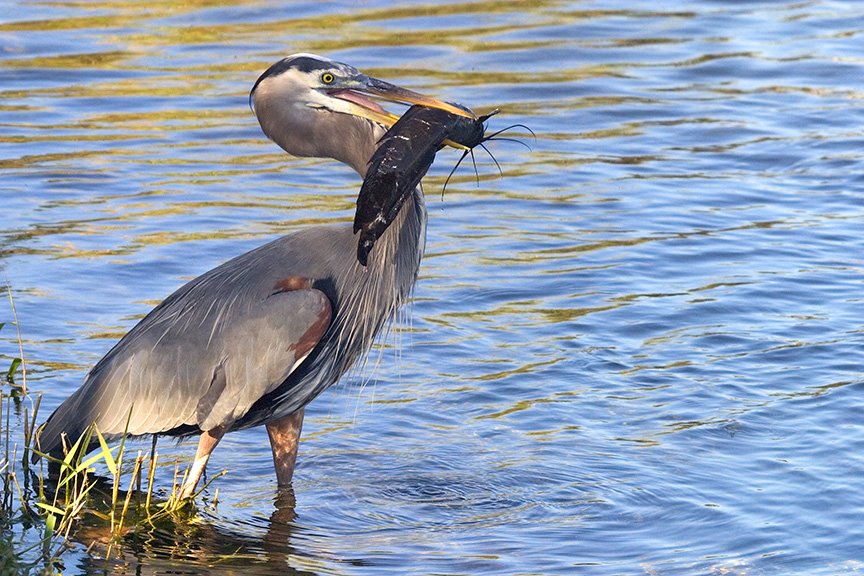
HUNGRY HERON


Great Blue Heron (Ardea herodias)
Location: Everglades
Photo: © 2003 Jeffrey Berger

Fish are the staple diet of the great blue heron. Watching a great blue swallow a fish can be an adventure in suspense, especially a spiny catfish larger than a heron's throat. Great blues have been known to choke on especially large prey.
Gulp! Ouch! Heimlich, anyone?

4.01.2006

A SPRING SAMPLER


Brown Pelican (Pelicanus occidentalis)
Photo: © 2012 Jeffrey Berger


Anhinga (Anhinga anhinga)
Photo: © 2012 Jeffrey Berger


Great Blue Heron (Ardea herodias)
Photo: © 2012 Jeffrey Berger