"If all the animals ceased to exist, human beings would die of a great loneliness of spirit" (Chief Seattle)
Showing posts with label Great Egret. Show all posts
1.01.2014
EGRET FAMILY VALUES
GREAT EGRET (Ardea alba)
Location: St. Johns County FL
Photo: © 2004 Jeffrey Berger
When planning your nest egg for the best of times or the worst of times, here is a bit of savvy investment advice from a native bird. It is always best to hedge your bets by hatching more eggs than you will need. Whether breeding or investing, it is a time-honored strategy perfected over millions of years.
Most large birds - such as eagles, egrets, or herons - will produce more eggs than they are capable of raising. Since all eggs need the same time to incubate regardless of when they are laid, Mamma Egret starts incubation after the first egg is laid and continues laying her full clutch over a series of days. Thus, the first egg hatches first, the last egg hatches last, and not all chicks start life as equal opportunity egrets.
The first-born hatchling has no competition for food and grows rapidly. Chicks born later are sequentially smaller and less capable of competing for food against the older siblings. Even in the best of times, only the older chicks will survive while the youngest will waste away. During routine housekeeping, parents will toss the expired chicks overboard, which inevitably become snacks for waiting gators. This phenomenon is known as ‘brood reduction.’
Labels:
birds,
brood reduction,
conservation,
ecology,
Great Egret,
Nature,
photography,
wetlands,
wildlife
3.01.2011
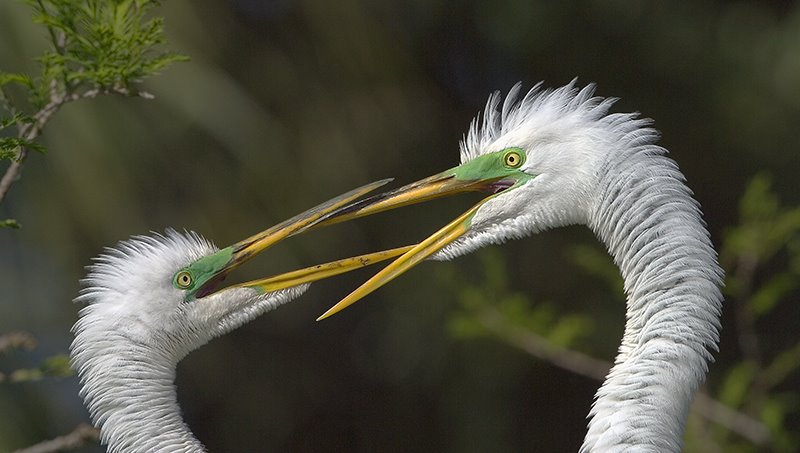
DANCING BEAK TO BEAK

Great Egret (Ardea alba)
Photo: © 2004 Jeff Berger
For the great egret, the breeding season begins when hormones cause the bare skin around the beak and eyes to change from yellow to green. The male builds a makeshift nest and invites a female to cohabitate thus signaling courtship. The nuptial pair announce their reproductive readiness by crossing beaks and fluffing up their feathers.
Labels:
birds,
conservation,
ecology,
Great Egret,
photography,
wetlands,
wildlife
10.09.2006
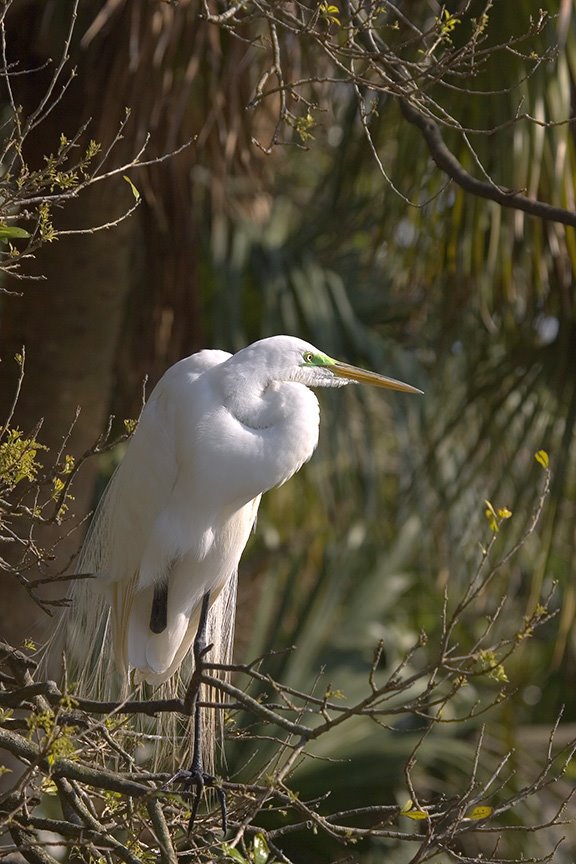
DRYAD

Great Egret (Ardea alba)
Photo: © 2005 Jeffrey Berger
According to Greek mythology, Dryads were a class of nymphs who presided over trees and forests. Like all nymphs, they represented a reverence for nature. Unlike nymphs, Dryads were considered mortal because they perished with the trees that sheltered and sustained them. The wanton destruction of a tree was considered an act of impiety against the gods and subject to punishment.
Today, many native birds come under the protection of state and federal laws. Despite these protections, some native species remain in steep decline. Why? Laws that protect birds from direct threats such as hunting and poaching do little to protect them from indirect threats such as habitat loss. Deprived of shelter and sustenance, many bird species will continue to decline in future years. How? Drainage of wetlands for agriculture or real estate development, wasteful water management policies, petrochemical pollutants, and the relentless encroachment of civilization into natural habitats, as examples.
The name "Dryad" captures the essence of a moral and spiritual dilemma, i.e., economic exploitation and waste in conflict with Nature.
Labels:
birds,
conservation,
Dryad,
ecology,
Great Egret,
Nature,
photography,
wetlands,
wildlife
9.06.2006
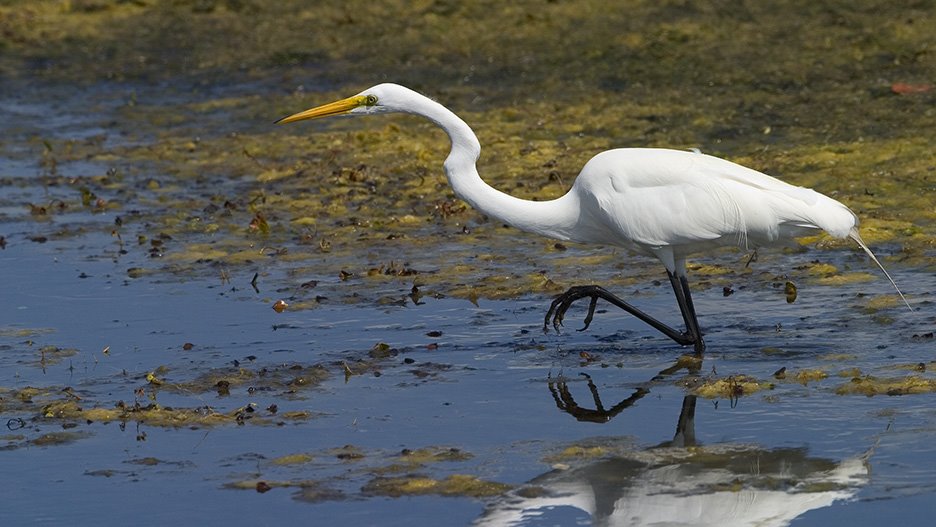
"LEGS"

GREAT EGRET (Ardea alba)
Location: Merritt Island NWR
Photo: © 2003 Jeff Berger
The slender and flowing Great Egret is an unmistakable presence in any wetlands environment. This large bird stands over three feet tall, decked in pure white feathers, a yellow pointed bill, and black legs and feet.
During the breeding season, long and lacy plumes extend beyond the lower back and tail. During flight, the Great Egret will fold its long neck into a characteristic S-curve, which gracefully unfurls as it glides to a landing on outstretched wings. To protect their nests from terrestrial predators, Great Egrets prefer the company of alligators.
Labels:
birds,
conservation,
ecology,
Great Egret,
photography,
wetlands,
wildlife
5.30.2006
GREAT EGRET

GREAT EGRET (Ardea alba)
Location: St. Johns County FL
Photo: © 2008 Jeffrey Berger
The Great Egret is a common bird in Florida and, not without coincidence, one of the most often photographed birds in this blog. For your convenience, here are some links to other photos: Notable, Adorable, Unforgettable, and always Egretable.
Labels:
Ardea alba,
Florida,
Great Egret,
photography,
wildlife
Subscribe to:
Posts (Atom)